
Compressed Sofa Fundamentals
What Is a Compressed Sofa? A Guide for Furniture Buyers
A practical B2B guide to compressed sofa construction, packaging, recovery, wholesale applications and the questions buyers should settle before ordering.
Direct answer
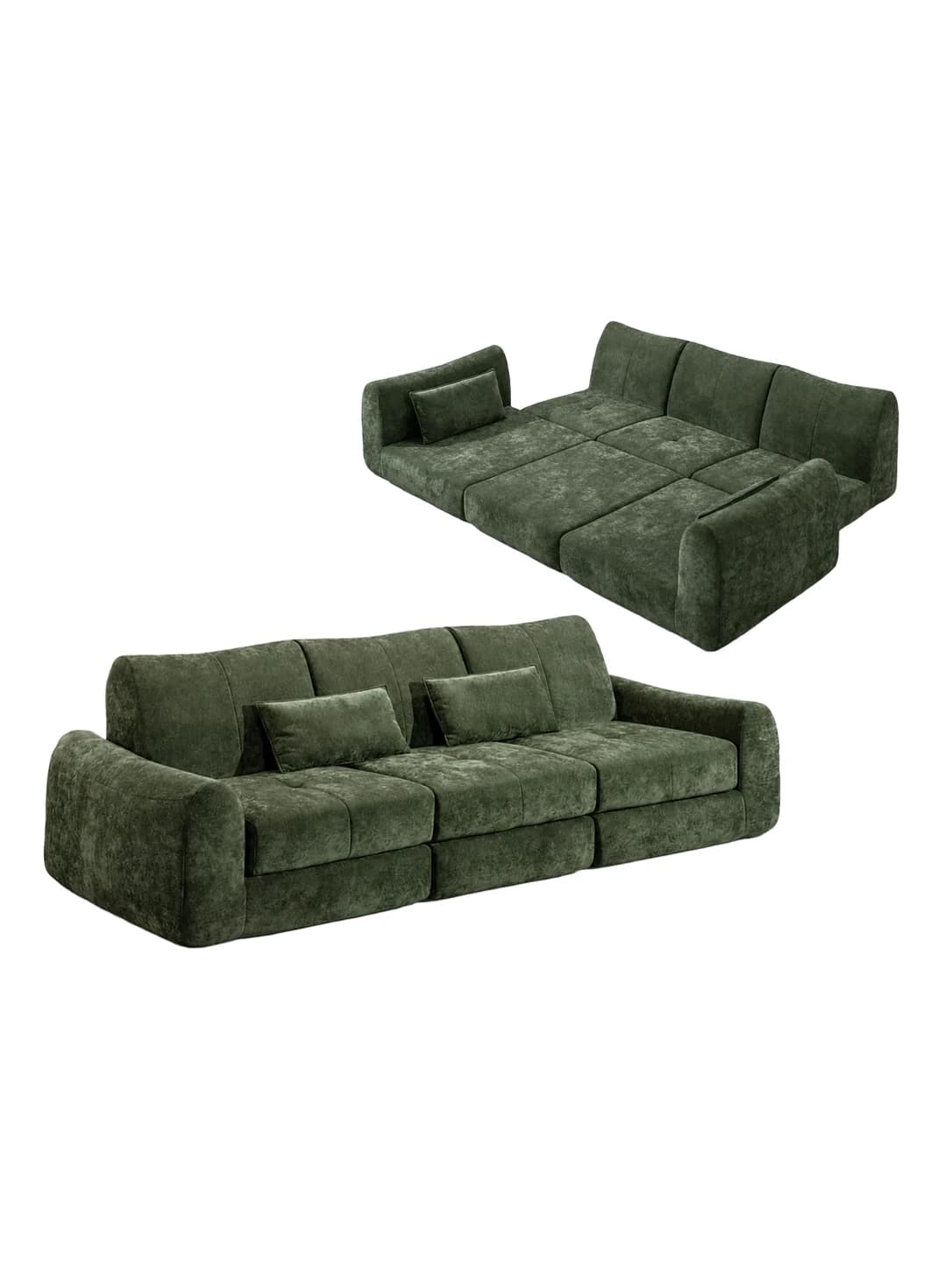
A compressed sofa is an upholstered seating product engineered to be compressed and packed in a smaller transport format before recovering after unpacking. For a B2B buyer, the important difference is not simply that the sofa fits in a box. The product, foam structure, seams, compression method, packed dimensions, recovery behavior and carton must work as one repeatable system for storage, transportation and resale.
Key takeaways
- Compression must be designed into the sofa construction; it is not a shipping trick applied after the product is finished.
- Buyers should compare both expanded and packed specifications at model level, not rely on a universal compression ratio.
- Recovery, support, seam stability, carton protection and repeatability are central wholesale quality questions.
- LiAroo’s compressed sofa range uses 40D high-resilience foam in a full-foam construction without pocket-spring units.
- A useful RFQ identifies the model, quantity, destination, sales channel, customization needs and required documents.
What defines a compressed sofa?
A compressed sofa is designed so that the finished upholstery can tolerate a controlled reduction in volume for packing and then return to its intended form. This usually involves coordinated choices in foam, cover pattern, internal support, joining method, compression sequence and carton protection. A conventional sofa may be too rigid, too spring-dependent or too sensitive at its seams to pass through the same process reliably.
For wholesale buyers, the definition should remain operational. A product deserves the compressed-sofa label only when the supplier can explain the pre-compression inspection, packing format, recovery expectations and model-specific specification. A lifestyle photograph or a small carton by itself does not establish repeatable production performance.
| Element | Why it matters | What to request |
|---|---|---|
| Expanded product | Determines seating format, support and resale positioning | Current model drawing, configuration and material description |
| Compression method | Affects stress on foam, covers, seams and components | Process explanation or representative packing footage |
| Packed unit | Drives storage, handling and freight planning | Model-specific packed dimensions, gross weight and carton format |
| Recovery | Shows whether shape and support return consistently | Recovery test method, inspection points and user instructions |
How does sofa construction support compression and recovery?
Foam selection matters because compression temporarily changes the volume and geometry of the product. Density designation, resilience, firmness and layer design are related but not interchangeable. Buyers should ask how the supplier controls each attribute and how it connects to the intended seat feel after recovery. Cover tension, cutting accuracy and sewing consistency also matter because an uneven cover can exaggerate wrinkles or distort the recovered profile.
LiAroo’s full compressed sofa range uses 40D high-resilience foam and a full-foam construction rather than pocket-spring or spring-unit construction. Those are owner-confirmed facts for the compressed sofa line. They should not be transferred to LiAroo mattresses, which can use different model-specific structures, including pocket coils.
Why full-foam construction needs disciplined control
Removing a spring pack does not remove the need for engineering. The supplier still has to control support zones, firmness, resilience, cutting tolerances, bonding, cover fit and the way modules meet. A buyer evaluating samples should judge the complete seating system rather than treat one foam-density number as a complete quality specification.
What recovery review should include
Recovery review should look beyond whether the sofa becomes larger. Inspect symmetry, intended dimensions, cushion profile, seam alignment, local firmness, resilience and the interfaces between modules. The agreed inspection timing and acceptance method belong in the approved specification or quality document.
Why do wholesale buyers consider sofa-in-a-box programs?
The commercial value is easier handling of a bulky category. A smaller packed format can improve warehouse slotting, movement through fulfillment systems and the number of units that fit within a defined logistics plan. The actual benefit depends on the expanded dimensions, packed dimensions, weight, carton strength and loading plan for the selected model; it should be calculated rather than assumed.
The format can suit furniture retailers, distributors, importers, warehouse sellers and e-commerce furniture brands, but each channel asks different questions. A showroom retailer may prioritize recovered appearance and comfort. An importer may focus on container planning and documentation. An e-commerce brand may care about carton durability, instructions and the customer’s unpacking experience.
How should a buyer evaluate a compressed sofa program?
Start with a model-bound review. Ask for the current expanded specification, packed specification, materials, construction, quality checkpoints, carton details and customization scope. Where a specification image is a current commercial reference rather than a signed production sheet, retain it for comparison but require a final production lock before manufacturing. This preserves useful information without mistaking a reference for a finished approval.
Then test repeatability. One successful unpacking does not prove a bulk program. Agree how samples and production units will be checked, how recovery is assessed, what packaging damage is unacceptable and how changes are versioned. The objective is a reproducible product-and-packaging system, not a one-off demonstration.
- Compare the same model and revision across quotation, sample, specification and carton artwork.
- Separate expanded dimensions from packed dimensions and record the unit for every value.
- Ask which inspection stages create records and which acceptance criteria require buyer approval.
- Confirm whether warehouse support, China-direct shipment or both are relevant to the program.
What should be confirmed before requesting a quotation?
A supplier can respond more accurately when the buyer provides a target model or reference, configuration, estimated quantity, destination, sales channel and desired customization. Add required fabric or color direction, label and carton needs, compliance-document questions and the preferred shipment route. Avoid asking for a single generic price for “a compressed sofa” because construction and packaging decisions define the quotation.
LiAroo handles compressed sofa sourcing as a B2B inquiry rather than a retail checkout. The useful next step is a documented RFQ that lets both sides identify what is confirmed, what remains a current reference and what must be locked before production.
Buyer checklist
- Identify the target model, configuration and intended buyer channel.
- Request expanded dimensions, packed dimensions, net weight and gross weight for that model.
- Review foam, construction, cover, seam and module-connection requirements.
- Define recovery inspection timing and acceptance points.
- Confirm carton structure, labels, instructions and handling marks.
- State quantity, destination and China-direct or third-party U.S. support preference.
- Lock the final production specification and version before manufacturing.
Frequently asked questions
Questions buyers often ask
Is a compressed sofa the same as a flat-pack sofa?
Not necessarily. Flat-pack usually means rigid parts are packed separately for assembly. A compressed sofa reduces the volume of upholstered sections through a controlled compression process. Some products may also use modular assembly, but the terms describe different packaging approaches.
Do all compressed sofas use the same compression ratio?
No. Packed size depends on the model, expanded dimensions, foam system, construction and packaging method. Buyers should request model-specific packed dimensions instead of applying one ratio across a range.
Do LiAroo compressed sofas contain pocket springs?
No. LiAroo’s compressed sofa range uses a full-foam construction based on 40D high-resilience foam rather than pocket-spring or spring-unit construction. This statement applies to sofas, not mattresses.
What is the first document a wholesale buyer should request?
Begin with a model-specific specification that separates expanded and packed information, then align it with the quotation, material requirements, packaging details and quality checkpoints.
Sources and scope notes
Sources are listed with their applicable product, model or sample scope. Document references are not blanket certifications for every LiAroo product.
1. LiAroo company-owner confirmation, reviewed July 31, 2026
Use only the claim IDs declared by the article and preserve compressed-sofa versus mattress scope.
2. LiAroo current model and specification references
Model dimensions remain current commercial references and require production lock before manufacturing.
3. LiAroo current B2B sourcing and disclosure policy
Controls B2B-only positioning, third-party warehouse wording and prohibited retail claims.
Related products
Related insights
Continue your sourcing path
B2B sourcing conversation
Send your product, quantity, market and customization requirements.
LiAroo can review the request as a factory-direct B2B inquiry and confirm the relevant model, documents, packaging and supply route.